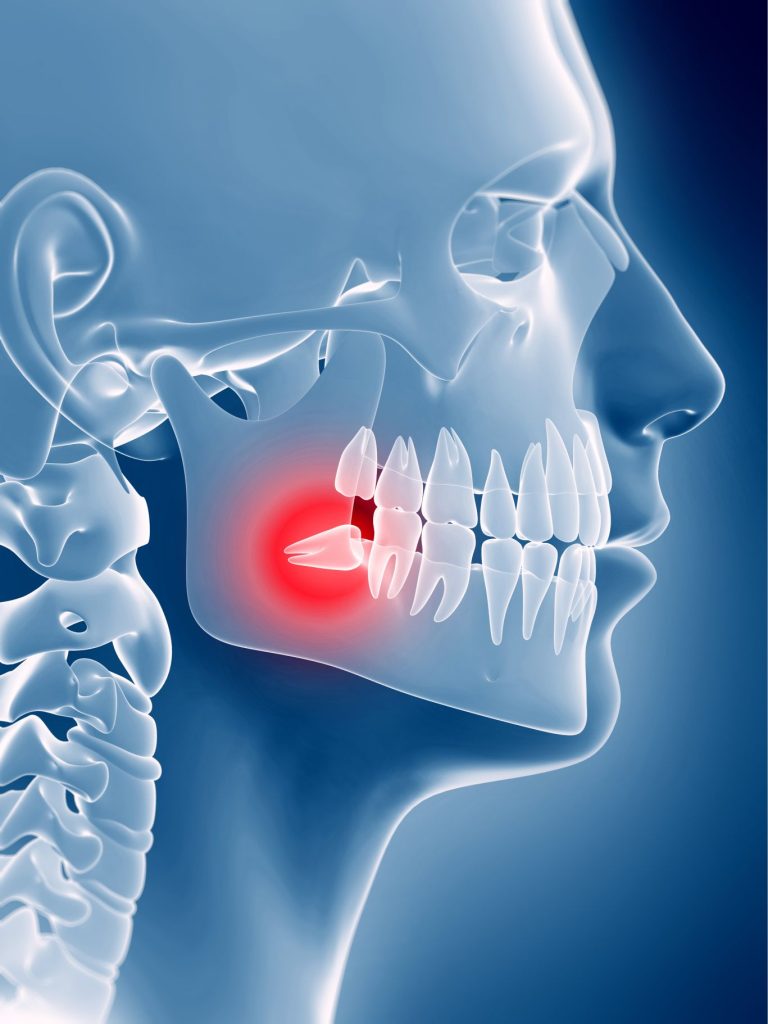
An average adult human being is supposed to have 32 teeth. They include eight incisors, four canines, eight premolars, eight molars, and four wisdom teeth. Most of these teeth, aside from the wisdom teeth, should be fully developed by the thirteenth year. The wisdom teeth, also known as the third molars, emerge in the late teen years or early ’20s. Therefore, it is reasonable to develop these four molars late in life. However, because there isn’t enough room left for these teeth to grow correctly, more often than not, the wisdom teeth are impacted.
As they squeeze their way out of the gum, these teeth tend to grow in at faulty angles, which can lead to other serious oral problems like gum infection, swelling, and pain. They can even affect the neighboring teeth. That’s why most people prefer to remove them immediately. Even when they do not cause pain, you need to have them checked because it is common to have impacted wisdom teeth that do not cause pain or discomfort. If you leave them to grow, they will cause serious problems later in life. Therefore, do not hesitate to have your wisdom teeth removed.

Impacted wisdom teeth not only cause oral problems but also affect the rest of the body. Medical scholars propose the principle of mouth-body connection. The concept implies that if your mouth is infected, your overall health is at risk as well. They further argue that an impacted wisdom tooth leads to inflammations, not just in the mouth but also in other parts of the body because the germs are carried throughout the body by the blood vessels. Consequently, you will suffer from high blood pressure, heart attack, as well as stroke. Thus, most surgeons recommend that you remove your wisdom teeth as soon as they develop even if you do not feel any discomfort.
With so many dangers involved with wisdom teeth, why would you allow yours to remain in your mouth? It would be best if you saw a qualified dentist to have your wisdom teeth checked and have the necessary removal procedure done before they cause serious problems. With routine checkups, your doctor will be able to detect potential issues before they develop into serious complications. Fortunately, many qualified dentists can help you take care of your wisdom teeth and avoid potential dangers in the future. Never assume any persistent pain in your mouth, especially if it is in your gum or jaw.